Email Send Limits – or Why Spammers Should Be ….

This week I spent about 8 hours wrestling MailMan to the ground. I got an A in wrestling during my first semester at college, which means I should be good at this, eh?

MailMan is free software for managing electronic mail discussion and e-newsletter lists. I started down the garden path of looking at MailMan for a client was sending out a mass email and bumped into the send mail limit of the hosting provider.

I’m not sure exactly when these limits have been applied or more accurately, strictly enforced, but it seems that they apply pretty much across the board on most web hosts, and even with gmail. The average is about 100 emails per session, or email. We’re talking about number of emails sent from a mail client, if you send from within gmail it’s a higher limit.

MailMan has a lot of features and is pretty decent, all things considered, but as the tech support on the phone told me “it’s not my favourite software”. Mine neither. It feels very dated, like something from the 90s. The 90s were great, but not so elegant.

It seems to me when you are sending through an authenticated account, that you should have a higher limit than 100, but I’m presuming this is the way to keep spammers at bay.

I think I’ve lost a year of my life to dealing with incoming spam, blocking spam, writing SPF records, sifting through junk mail for valid emails, handling comment spam and the like.

There was  a bill passed here in Canada, Apparently the fines are intense, up to $10 million dollars for corporations,  but if it’s had an affect I don’t think anyone’s noticed.

I wonder how many individuals and/or corporations have been fined for sending out spam here in Canada, and what are the stats like for our neighbours in the South? And, when they have been fined, how much was it for, and was the money received?

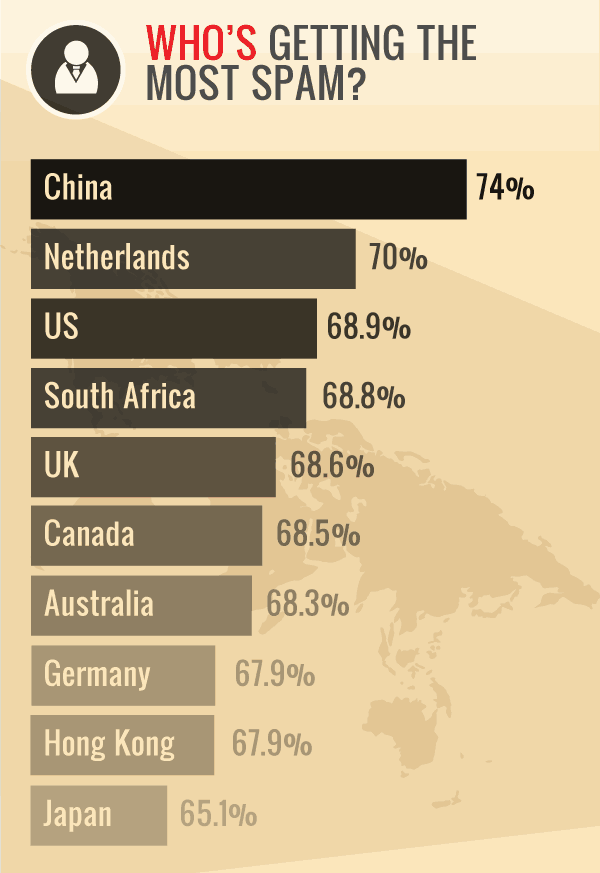
Canadians receive 68.5% of spam.

Source: http://www.emailtray.com/blog/infographic-email-spam-phishing-trends-2011-2012/


SPF record – aka anti email spoofing

I set up SPF records for 4 domains 4 days ago. An SPF (Sender Policy Framework) record “is an email validation system designed to prevent email spam by detecting email spoofing, a common vulnerability, by verifying sender IP addresses” (WikiPedia)

Since we’re using Media Temple DV server, I followed their guidelines. (which they’ve since updated with a correct link to an SPF wizard btw – the old wizard link didn’t work so they helped me on the phone which was great ).

On diamedia.net I was getting about ~5-10 spoofed emails a day (that appear to be coming from your own domain ie: accounting @ diamedia.net etc). On the other domains about 3 a day. But some days it could be higher.

How long does the SPF record transition take?

DNS records take about 24-48 hours to update. I’ve always thought this was exaggerated, however that was using the lens of how long it takes local servers to update to switching hosts, for example. I was never thinking about servers in Russia or Italy.

I set up a temporary folder in my email to move these emails (moved them manually) to keep track.

Day 1: 8 spoofed emails
Day 2: 5 spoofed emails
Day 3: 1 spoofed email
Day 4: 1 spoofed email

So, it appears to be working. I used a soft-fail (accept and tag any non-compliant mail) which is different than hard-fail (bounce any mail that doesn’t comply) so this is how the Day 3 and Day 4 are getting through. Actually Day 4 used google servers, which I have set up to allow google to be a mail server. I might switch this.
[ v=spf1 a:example.com/20 include:_spf.google.com ~all ]

I also will probably switch to a hard-fail once I am 100% sure about what this entails.

This was something I have been wanting to do for ages, but kept on putting off because it seemed to be gobbledeegook. Now I can cross that off the list and not add it to New Year’s Resolutions for 2012.

It’s Christmas Eve. Back to helping out Santa’s Elves.